When comparing rubber tracks vs tires in agriculture, two terms come up fast: flotation and soil compaction.
They’re often used interchangeably, but they shouldn’t be.
Understanding the difference between flotation and compaction is critical for choosing the right equipment setup, protecting soil health, and maintaining productivity in the field.
At Rubber Track Solutions, we help dealers and producers make these decisions every day. Because the right choice depends on what problem you’re solving in the field.
Flotation vs Compaction (Quick Answer)
Flotation is a machine’s ability to stay on top of soft soil and move without sinking. Compaction refers to how equipment weight compresses the soil below the surface, affecting root growth and long-term yield.
Flotation: Staying on Top and Moving Forward
Flotation determines how well a machine can operate in soft or wet field conditions without excessive sinking.
When flotation is working in your favor, you’ll see:
- Reduced rutting
- Better forward movement
- More consistent field performance
- Fewer weather-related delays
What improves flotation?
It comes down to weight distribution.
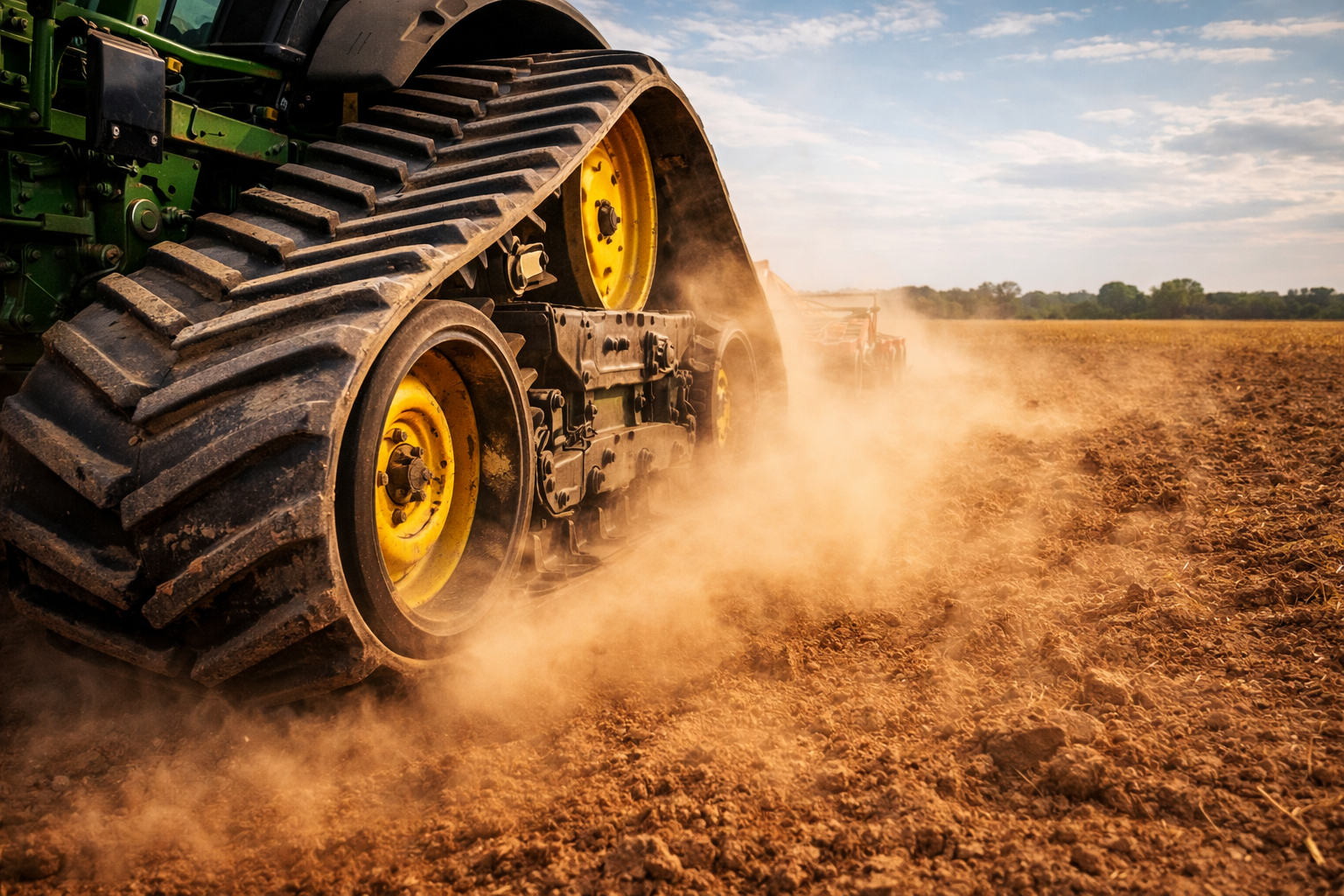
The more evenly weight is spread across the ground, the lower the ground pressure—and the easier it is for equipment to stay on top of the soil instead of digging in.
Rubber tracks naturally provide:
- A larger contact patch
- More even weight distribution
- Lower surface pressure
- Improved mobility in soft conditions
For producers, that often means more uptime and fewer missed windows.
Compaction: What’s Happening Below the Surface
While flotation focuses on surface performance, soil compaction affects what’s happening underground.
Compaction occurs when equipment weight compresses the soil profile—especially deeper in the root zone.
Over time, this can lead to:
- Restricted root growth
- Poor water infiltration
- Reduced nutrient absorption
- Limited oxygen exchange
- Lower long-term yield potential
Here’s the key:
A machine can have excellent flotation—and still cause harmful compaction if weight and load aren’t managed properly.
Flotation vs Compaction: Why Both Matter
Flotation and compaction are connected—but they solve different problems.
| Flotation | Compaction |
|---|---|
| Impacts mobility | Impacts soil structure |
| Surface-level focus | Surface and subsurface impact |
| Affects uptime and productivity | Affects long-term yield |
| Improved with larger footprint | Reduced with proper load distribution |
If you only focus on flotation, you may still damage the soil below.
If you only focus on compaction, you may sacrifice productivity in the field.
The right equipment setup considers both.
Rubber Tracks vs Tires: Why More Producers Are Choosing Tracks
Today’s operators are balancing tighter margins, unpredictable weather, and increasing pressure to protect yield.
That’s why many are turning to rubber tracks—especially in applications where flotation and soil protection matter most.
Advantages of rubber tracks:
Better weight distributionA larger footprint helps reduce surface pressure and protect topsoil.
Improved tractionLess slippage means more efficient power transfer and more acres covered per hour.
Enhanced flotationTracks allow machines to move more effectively through soft or wet conditions, reducing downtime.
Trade-Offs to Consider
No solution is perfect, and rubber tracks are no exception.
It’s important to evaluate:
- Slower roading speeds
- Rougher ride on hard surfaces
- Undercarriage maintenance requirements
The right choice depends on your application, field conditions, and how the equipment is used day to day.
What This Means for Dealers and Producers
Choosing between rubber tracks and tires isn’t just a spec decision—it’s a business decision.
It impacts:
- Productivity in the field
- Soil health over time
- Equipment performance
- Overall return on investment
At Rubber Track Solutions, we help dealers and producers:
- Evaluate ground pressure and field conditions
- Match the right track to the right machine
- Avoid costly misfits and downtime
- Make confident, informed decisions
Because when you get it right, everything works better—from the field to the bottom line.
Frequently Asked Questions
Rubber tracks can help reduce surface-level compaction by spreading weight over a larger footprint. However, deeper compaction still depends on total machine weight and load distribution.
Yes. Rubber tracks typically provide better flotation, allowing machines to move through soft or wet ground with less rutting and fewer delays.
Soil compaction is caused by heavy equipment compressing the soil, especially when weight is concentrated over smaller contact areas or repeated passes occur.
No. Flotation affects how a machine moves across the surface, while compaction affects the soil structure below the surface.
Bottom Line
Flotation helps you move.
Compaction determines what’s left behind.
Understanding both—and how rubber tracks vs tires influence each—is key to protecting your soil, maximizing productivity, and making the right call for your operation.
